
Ever check your bank account and wonder where the money went? Sometimes it isn’t one big purchase. It’s the little things we buy without giving them much thought.
You don’t have to give up everything you enjoy to spend less. Start by noticing which purchases actually make your life better—and which ones have simply become habits.
Here are 12 everyday purchases worth reconsidering.
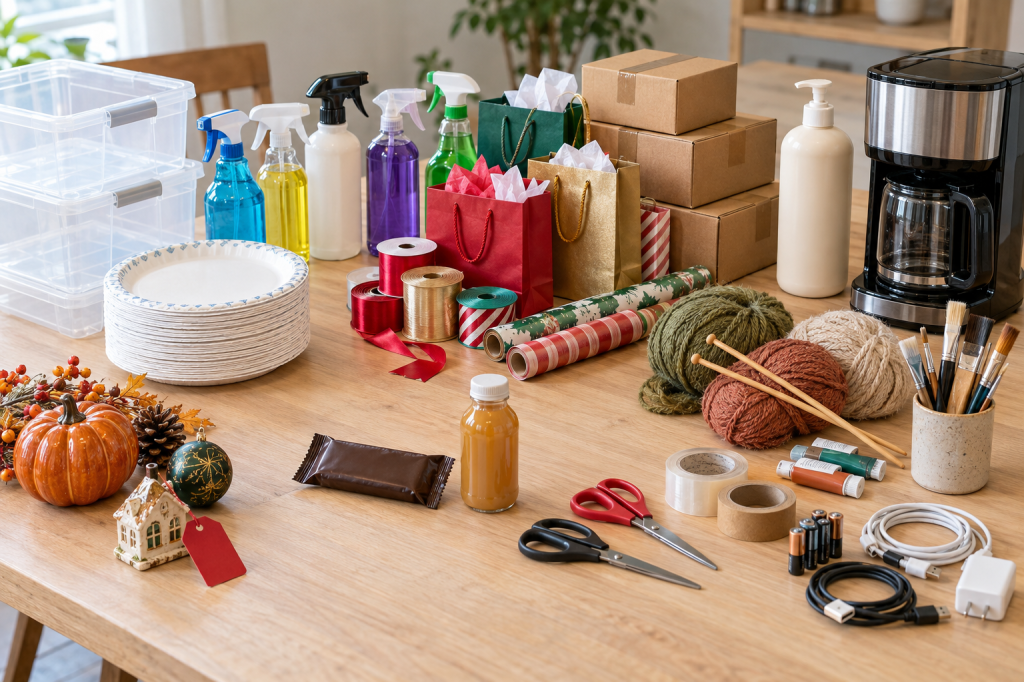
1. Storage Containers Before Decluttering
Matching bins and baskets can make a room look organized, but buying more storage doesn’t always solve the problem.
Before you shop, empty one drawer, shelf, or closet. Donate what you don’t use, throw away what’s broken, and group similar items together.
Try this instead: Measure what’s left and buy containers only when you know exactly what they need to hold.
2. A Separate Cleaner for Every Surface
A cabinet full of specialty cleaners can cost money and take up space. You may already have a product that handles several routine cleaning jobs.
Try this instead: Read the labels on what you own before adding another bottle. Follow surface-care instructions, and never mix cleaning products.
Keep specialty products when a particular material or cleaning task requires them.
3. Disposable Paper Plates for Everyday Meals
Paper plates are convenient, especially during busy weeks. But when they become the everyday default, you’re repeatedly buying something you already have in reusable form.
Try this instead: Use your regular dishes for ordinary meals and save disposable plates for occasions when the convenience is worth the expense.
4. New Gift Bags and Wrapping Supplies
It’s easy to grab a gift bag, tissue paper, ribbon, and a card every time you buy a present.
Try this instead: Keep a small collection of reusable gift bags and leftover wrapping supplies in one place. Check it before shopping.
Save only what’s in good condition and what you’ll realistically reuse.
5. Small Online Orders Made Out of Habit
A quick order can turn into extra spending when you add items to reach a shipping minimum.
Try this instead: Keep a running shopping list and combine purchases you actually need. Before adding a filler item, compare its price with the shipping charge.
Spending more to avoid a smaller fee doesn’t necessarily save money.
6. Full-Size Products You Haven’t Tried
A large bottle can look like the better value—until you discover you dislike the scent, flavor, or texture.
Try this instead: Buy the smallest practical size of unfamiliar products. Once you know you’ll use something, compare unit prices on larger sizes.
The lowest price per ounce only helps when the product gets used.
7. Supplies for a Hobby You Haven’t Started
A new hobby can inspire a shopping cart full of equipment before you’ve tried the activity even once.
Try this instead: Start with the basics, borrow equipment, or look for used supplies. Add more after you know what you enjoy and what you need.
You can explore an interest without buying the complete setup on day one.
8. Seasonal Decorations Without Checking Your Boxes
It’s easy to forget what you packed away last year when stores fill their shelves with something new.
Try this instead: Unpack your decorations before shopping. Take a quick photo of your collection so you can check it while you’re out.
Sometimes rearranging familiar pieces is enough to make a room feel different.
9. Upgrades for Things That Still Work
A newer coffee maker, phone, or kitchen gadget may be appealing even when the one you own still does its job.
Try this instead: Write down the problem an upgrade would solve. If you can’t name one that matters to you, wait.
Replace things when their condition, safety, or usefulness calls for it.
10. Checkout Extras
Candy, drinks, little gadgets, and travel-size products can slip into your purchase while you’re waiting to pay.
Try this instead: Before checking out, look through your cart and ask, “Did I come here for this?”
You can still choose a treat. The goal is to make the choice deliberately.
11. Replacements for Things You Already Own
Scissors, tape, batteries, charging cables, and other small essentials are easy to buy again when you can’t find them.
Try this instead: Give frequently misplaced items a permanent home. Check that spot before adding replacements to your list.
A simple drawer organizer may be more useful than another package of duplicates.
12. Sale Items Without a Specific Use
A clearance sticker can make almost anything feel like a smart purchase.
But a discounted item still costs money—and it may need storage, maintenance, or additional purchases.
Try this instead: Ask, “When will I use this, and would I want it without the sale sign?”
If you don’t have a clear answer, leave it behind.
Start With One Habit
You don’t need to change all 12 habits at once. Pick one purchase you make regularly and try a different approach this week.
Check what you own. Wait before ordering. Use something up before replacing it.
Saving money becomes easier when fewer purchases happen on autopilot.



Leave a Reply